China Targets Crypto Corruption in New Communist Party Resolution
By Nodora News ·
China's Communist Party vowed to crack down on corruption using crypto and blockchain, but its new resolution adds no fresh rules on Bitcoin trading or mining.
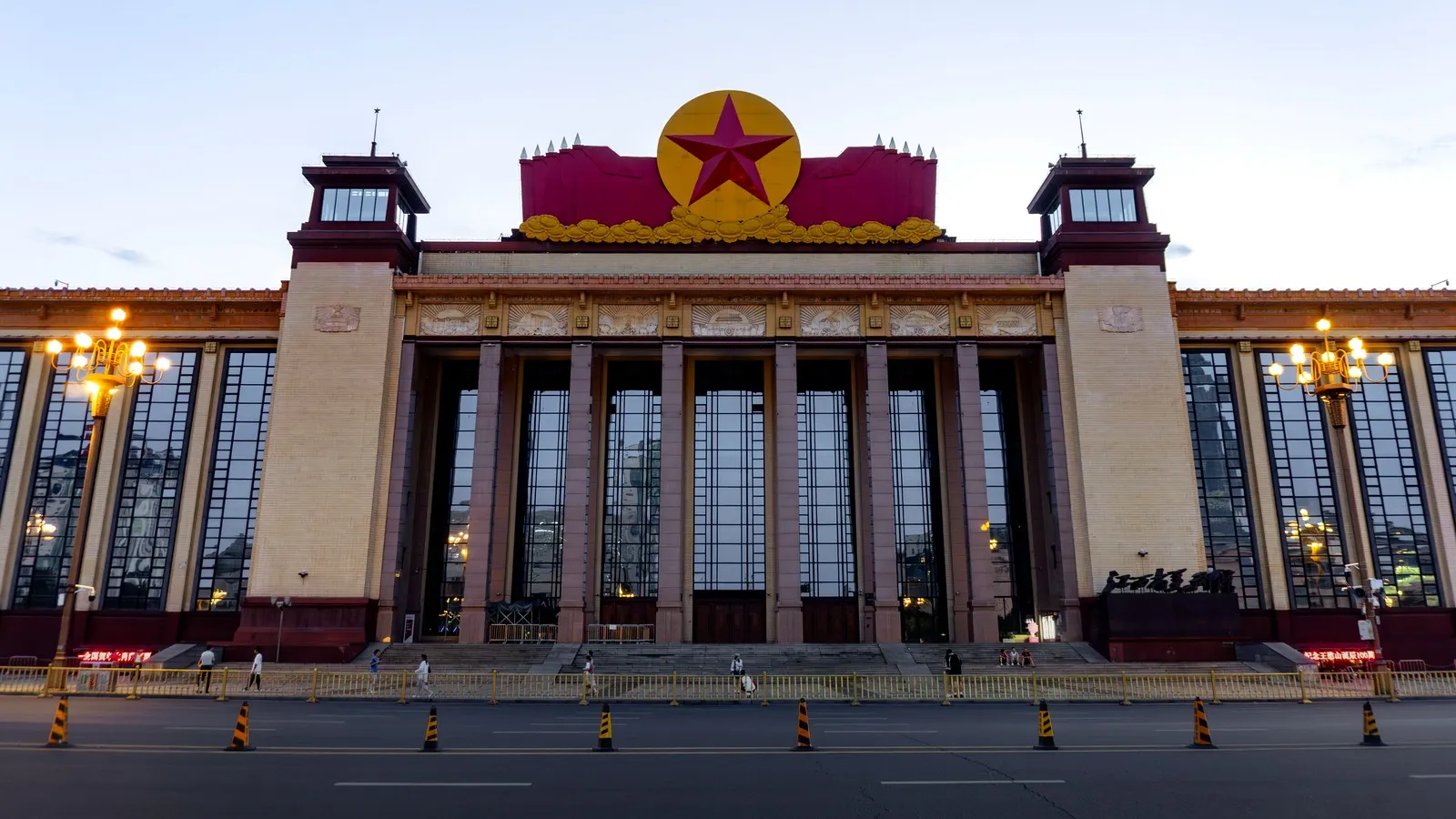
China's ruling Communist Party has named virtual currency and blockchain as tools of corruption it intends to stamp out. The pledge sits in a resolution adopted by the Party's Central Committee on October 29, 2026, at the fifth plenary session of the 20th Central Committee, and published in full by the state news agency Xinhua on Sunday, November 1. The text does not mention Bitcoin (BTC) or any other coin by name, and it sets no new rules on crypto trading, mining or stablecoins. Bitcoin barely reacted, trading near $78,300 on Monday evening in Melbourne.
Key takeaways
- The Central Committee resolution vows to "resolutely crack down" on corruption carried out through the internet, virtual currency, cross-border funds and blockchain.
- The crypto reference is a single line inside a long document about Party discipline, not a new crypto law or regulation.
- Bitcoin, trading, mining and stablecoins are not mentioned. Crypto has been effectively banned on the Chinese mainland since 2021.
- The resolution also backs digital discipline-inspection and big-data platforms to watch how officials use public power.
- Market reaction was muted: BTC was up about 0.2% over 24 hours and ETH about 1.1%, according to OKX.
What China's new resolution says about crypto
The document is titled the Resolution of the Central Committee of the Communist Party of China on Certain Major Issues concerning Persevering with Full and Rigorous Party Self-Governance. In plain terms, it is the Party's plan for keeping its own members in line, and much of it deals with ideology, cadre training and internal discipline.
The crypto mention comes in Section VII, which covers the fight against corruption. Alongside long-running targets such as bribery and officials' family networks, the Party says it will dig into "new and disguised" forms of corruption. It lists examples including:
- Expected gains, where an official is promised a reward later, often after leaving office.
- Agreed proxy holding, where someone else holds assets on an official's behalf.
- "White gloves", middlemen who front deals so the official's name stays off the paperwork.
- The "revolving door" between government posts and business.
In the same passage it pledges to crack down on corruption carried out through the internet, virtual currency, cross-border funds, blockchain and similar channels. The wording is the same in the Chinese original on the central government website and in Xinhua's English translation.
Why crypto shows up in an anti-corruption plan
Crypto appeals to anyone trying to move or hide value outside the banking system. Coins can be held in a self-custody wallet with no name attached, sent across borders in minutes, and swapped through bridges and mixers that make them harder to trace. That is exactly the kind of "hidden" corruption the resolution describes.
Naming crypto in a top-level Party document signals to the country's discipline inspectors that digital assets are now a standard part of corruption investigations. The South China Morning Post reported that the same resolution backs a digital discipline-inspection platform and a big-data supervision platform, tools that could make it easier to spot unusual flows of money linked to officials.
What the document does not do matters just as much. It does not change the status of crypto for ordinary people, open or close any market, or touch mining. It is aimed at Party members and officials who might use crypto to take bribes or move money abroad.
How this fits China's long crypto crackdown
China has tightened its stance on crypto step by step for more than a decade:
- December 2013: the People's Bank of China and other regulators barred banks from handling Bitcoin transactions.
- September 2017: the central bank banned initial coin offerings (ICOs) and exchanges serving people in China.
- September 2021: authorities declared all crypto transactions illegal and moved against Bitcoin mining, which at the time made up a large share of the global network.
- February 6, 2026: a central bank-led notice restated that virtual currency business on the mainland is illegal financial activity, and barred offshore yuan-pegged stablecoins and unapproved tokenisation of real-world assets, as summarised by CoinDesk.
Against that backdrop, the new resolution is less a fresh crackdown on the crypto industry than a reminder that the Party sees digital assets as a corruption risk inside its own ranks.
Bitcoin price and market reaction
Traders largely shrugged off the news. On OKX on Monday evening (Melbourne time):
- Bitcoin (BTC): about $78,320, up 0.2% in 24 hours
- Ethereum (ETH): about $2,300, up 1.1%
- Tron (TRX): about $0.316, up 1.7%
- BNB: about $711, down 0.4%
The market's attention is still on the fallout from the record Binance hack and on US spot Bitcoin ETF flows. You can read our earlier coverage on the FBI's attribution of the Binance hack to North Korea and the $643 million Bitcoin ETF outflow that followed it. Live prices for the top coins are on the Nodora charts page.
What to watch next
Party resolutions in China usually set direction rather than detail. The next things to watch are:
- Follow-up enforcement: whether China's Central Commission for Discipline Inspection publishes cases involving crypto-linked bribery or hidden holdings by officials.
- New implementing rules: any guidance from the central bank or financial regulators that builds on the resolution's language about virtual currency and cross-border funds.
- Hong Kong's position: whether the mainland push affects Hong Kong's licensed crypto market, which so far has developed under its own rules.
- Big-data supervision: how quickly the promised digital inspection platforms are rolled out and whether they include on-chain monitoring.
For now, the resolution changes little for global crypto markets. It does confirm that Beijing's view of crypto has not softened, and that digital assets are now firmly on the radar of the Party's anti-corruption machinery.
*This article is for information only and is not financial advice.*
SourcesCoinDesk, Xinhua, Gov.cn +25
- CoinDeskChina's Communist Party calls for a crackdown on corruption that uses crypto and blockchain
- XinhuaFull text: Resolution of the Central Committee of the Communist Party of China on Certain Major Issues concerning Persevering with Full and Rigorous Party Self-Governance
- Gov.cn中共中央关于持之以恒推进全面从严治党若干重大问题的决定
- South China Morning PostChina's fifth plenum: Communist Party pledges to reach deeper into tech, digital platforms
- Beijing ReviewFull text of the Resolution on Full and Rigorous Party Self-Governance
This article is general information, not financial advice.
Open Nodora News in the app